7 juli 2022
Sustainability for Artists
As an artist, especially a painter, you use chemicals to create art. When a work sells, you also need to ship it. These activities inevitably affect the environment, so we have a responsibility to handle them carefully.
In this article, I share tips for bringing sustainability into your practice as an artist.
What Is Sustainability?
Sustainability includes renewable energy, sustainable building, development and our ecological footprint. It is a broad subject concerned with balancing people, the environment and the economy so that we do not exhaust the planet. We can also become more aware of these issues in art and make changes where needed.
The aim is to avoid lasting environmental damage and preserve the world for future generations, for example by using energy sources and natural resources wisely.
Responsible business practices, care for the environment and climate, reusing raw materials and conserving energy are all part of the answer to the question ‘What is sustainability?’
Sustainability means meeting our needs without endangering people, the environment or the economy, now or in the future. This is a challenge because the Western world’s footprint is still too large. Join in and reduce your footprint by making sustainability part of daily life. Tell your friends about Allesduurzaam.nl too.
A Better World Starts with You
You may hear people say: let big companies sort it out, because they cause the most environmental damage.
A Better World Starts with You
You may hear people say: let big companies sort it out, because they cause the most environmental damage.
The video above shows that they have a point and that governments still have major steps to take. This may discourage you from acting because your efforts seem pointless. But your small steps towards a better world really can matter.
Imagine the impact if a million people adopted a different way of life. As more businesses, countries and individuals take part, major change becomes possible.
Sustainability for Artists
More than ever, designers and visual artists are reflecting on the challenges facing this generation. For many artists, nature is both a beautiful subject and a compass guiding artistic choices. They also explore alternative techniques and materials that may later prove useful in other industries.
A healthier environment starts with you, including your practice as an artist. How should you dispose of leftover paint, and how can you ship art more sustainably? This article offers tips for running an art practice with the environment in mind.
Why Can Paint Harm the Environment?
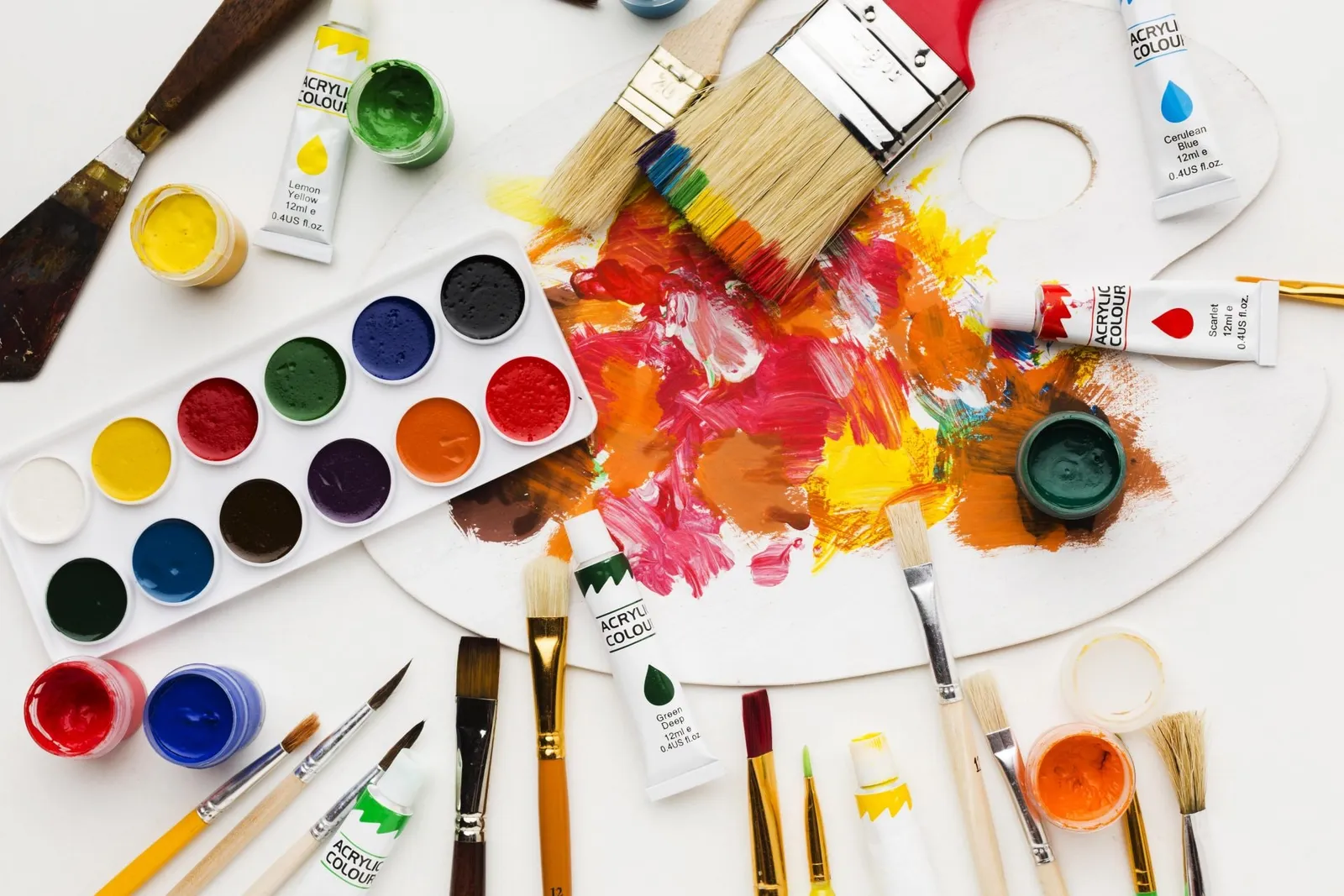
Oil and acrylic paints can contain harmful substances and may require hazardous waste disposal. Some products contain solvents, while certain pigments contain toxic heavy metals such as cadmium. Acrylic paint also contains acrylates, which are plastic polymers.
Can Oil or Acrylic Paint Go Down the Sink?
Pouring paint down a sink or toilet sends chemicals into the sewer. You should therefore avoid rinsing quantities of acrylic paint down the sink. Paint residues can also block drains.
“Improve the world: start with yourself.MY MOTHER”
But what about small amounts, such as the water used to wash your brushes? Does that end up in the environment or waterways? What is the best way to dispose of paint, wastewater and white spirit?
Disposing of Liquid Paint
Take unwanted liquid paint, such as paint in tubes you no longer use, to a waste collection facility. It can then be handled appropriately and some raw materials may be recycled. Disposal requirements for dried paint vary by product and local authority; a collection facility can advise.
Later in this article, we look at wastewater and white spirit.
How Should You Clean Brushes?
When you finish painting, remove most of the paint from your brush with a damp cloth. Work outwards from the heel, where the bristles enter the ferrule, towards the tip.
For acrylic paint, rinse brushes in a jar of water with a little washing-up liquid. For oil paint, use a suitable white spirit substitute, such as Zest-it. Wipe the brush again with a damp cloth and repeat if paint remains.
Reuse the cloth until it is no longer usable, then dispose of it according to the paint’s instructions and local waste requirements. A waste collection facility can advise on paint-contaminated materials.
What Should You Do with Wastewater or White Spirit?
After cleaning your brushes, you are left with dirty water or white spirit. How can you handle it with the least environmental impact?
Acrylic Paint
Acrylic paint contains acrylates, a type of plastic. Depending on the pigments, it may also contain heavy metals such as cadmium. Should this simply go down the sink?
Ideally, keep paint residues out of the drain.
Wastewater treatment is becoming more effective, including at removing heavy metals. KM, the journal of technical information about artists’ materials, also discusses how acrylic particles can be captured in sewage sludge. During heavy rain, however, sewer overflows can carry untreated wastewater into surface waters.
Wastewater treatment services urge users to minimise the amount of acrylic paint entering sewers. The following tips can help.
- Set brush-cleaning water aside for a few days. During this time, many paint particles settle to the bottom.
- Once the particles have settled, carefully pour the clearer top layer into another jar for reuse. Leave the remaining paint sludge to dry or take it to a waste collection facility, following local disposal requirements. The next section explains how to speed up evaporation of water.
Allowing Acrylic Paint Water to Evaporate
Another method is to leave the water uncovered so that it evaporates and the paint remains. Once dry, dispose of the residue according to local waste guidance.
Large quantities of water take a long time to evaporate. A wide container increases the exposed surface area and speeds up evaporation compared with a narrow jar. A warm, sunny location can also help.
A balcony planter is one possible container, available from many DIY shops. Make sure there are no drainage holes and keep it out of reach of children and pets.
UPDATE: This oil collection tray may be an even better alternative!
If you have more room, you could use a drip tray, such as a washing machine drip tray.
The acrylic paint remains and can be scraped off, or left in the container, for appropriate disposal.
White Spirit
Always ensure good ventilation when working with white spirit. It is a volatile substance, so it evaporates readily. Breathing solvent vapours is harmful. Repeated exposure can contribute to organic psychosyndrome, also known as OPS or painter’s syndrome. Handle it carefully.
Take white spirit containing paint residues to a hazardous waste collection facility in a suitable, tightly closed container. It is toxic and flammable, so store and transport it carefully.
To reuse white spirit, let the paint settle in a closed jar, then carefully pour the clearer upper layer into another suitable container. Keep the remaining solvent and paint sludge sealed and take it to a hazardous waste collection facility rather than deliberately evaporating the solvent.
Environmentally Conscious Packaging
Creating art produces waste, and so does shipping it to buyers. Choosing suitable packaging can help reduce the environmental impact.
Protective Materials
You naturally want your artwork to arrive undamaged, so careful packaging matters.
Bubble wrap is widely used to protect art and other objects in transit. You may be drawn to biodegradable or biobased plastics, but these terms describe different properties: the source of the material and how it breaks down.
Biodegradable plastic does not always break down quickly enough for municipal composting. It may also be unsuitable for ordinary plastic recycling and may need to go into residual waste. Check the packaging instructions and local collection rules.
Biodegradable plastic can be useful in specific applications, such as certain planting pots or fishing materials designed to break down under defined conditions.
Even carefully chosen packaging loses some of its benefit if the customer puts everything into residual waste.
Biobased plastics are made partly or wholly from renewable biological materials, such as sugar cane. Their recyclability depends on the polymer and the local collection system. Biobased bubble wrap is one option to explore alongside reuse and other protective materials.
Read more about different plastics here and find further background on biobased materials here.
Involve the Customer
Even if you choose environmentally conscious packaging, it matters how the customer disposes of it.
Involve your customer by asking them to sort packaging carefully. Include a short note explaining which materials you used and how or where they can be recycled.
Keep the instructions concise: a few simple sentences are more likely to be read than a long explanation. If you have the note printed, consider an environmentally conscious printer.
What Can You Change as an Artist?
Consider alternatives to your usual materials. The table below offers ideas to investigate; the best choice depends on the specific product and how you use and dispose of it.
Material to reconsider: · Possible alternative: White spirit · Zest-it or Bial Cotton · Linen Acrylic paint · Oil paint or egg tempera Synthetic pigments · Organic pigments Buying new materials · Buying used or second-hand materials Materials that are difficult to break down · Biodegradable materials
Conclusion
As an artist, you can take practical steps to reduce your environmental impact. Handle waste carefully, choose packaging that can be reused or recycled and ask your customers to help.
Do you have questions, suggestions or tips for this article? Share them below!