28 June 2022
Gold Leaf in Art
The Meaning of Icons and Gold Leaf in Art and Spirituality
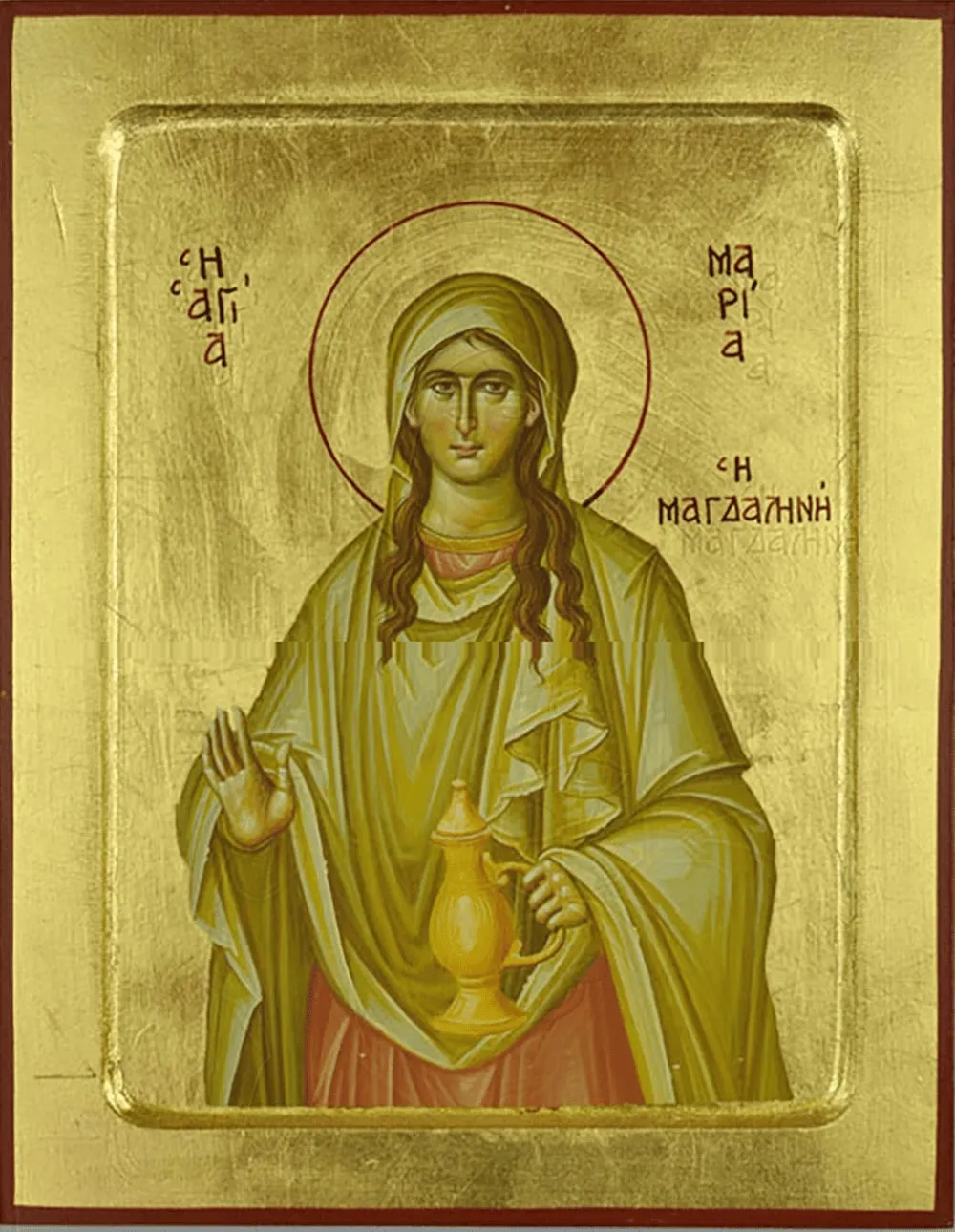
The word icon means drawing or image in Greek. An eikon more specifically refers to a religious image of Christ, the Mother of God, saints or important church celebrations. Throughout art history, gold leaf has decorated these images and emphasised their sacred character.
Gold leaf often brings icons to mind. Traditionally, icon painters work on wooden panels according to strict guidelines intended to preserve purity and consistency with the church’s original teachings.
Painting Icons
Icons belong to the Eastern Orthodox, Oriental Orthodox and Eastern Catholic churches. They are deeply rooted in spiritual and church life. Eastern Orthodox believers regard icon painting as sacred work, often accompanied by prayer and a request for God’s blessing.
Today, icon painters generally leave their work unsigned, although some traditions, including Greek ones, differ.
The earliest icons developed in regions practising Eastern forms of Christianity, including Greece, Russia, the Balkans, Eastern Europe, Egypt and Ethiopia.
Icons in Theology
During the seventh and eighth centuries, the Byzantine Empire lost territory to Arab and Slavic peoples. Emperor Leo III believed these losses were divine punishment for the use of icons. Jewish and Islamic opposition to religious images may have influenced this view.
Many Christians opposed the veneration of icons, citing the prohibition of idolatry in the second of the Ten Commandments:
““You shall have no other gods before me. You shall not make for yourself a carved image or likeness […]. You shall not bow down to them or serve them.””
These opponents were called iconoclasts, literally image-breakers. The Council of Hieria prohibited icons in 754.
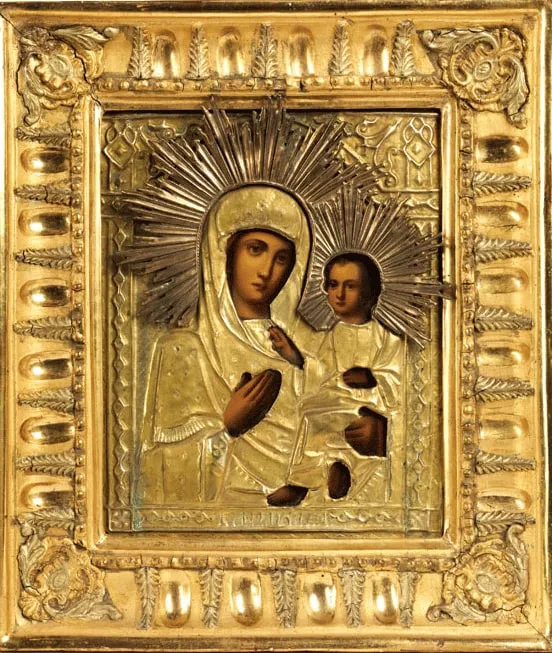
Supporters of Icons
Supporters were known as iconodules. Their leading defender, John of Damascus, argued that some biblical passages permitted images. He understood the Old Testament prohibition as applying to the depiction of an invisible God. Through Christ’s incarnation, God had become visible and could therefore be represented.
After more than thirty years of conflict, the Second Council of Nicaea in 787 permitted icons again. Worship of the images was prohibited, but reverence was encouraged.
Icons and Spirituality
In Orthodox tradition, an icon is more than an image: it offers a connection with God and the saints. The fourth-century church father Basil of Caesarea expressed it this way:
““The honour shown to the image passes to its original.””
Believers pray to the saint depicted, showing reverence through crossing themselves, bowing and kissing the icon. In churches, candles are placed beside icons, often on special stands.
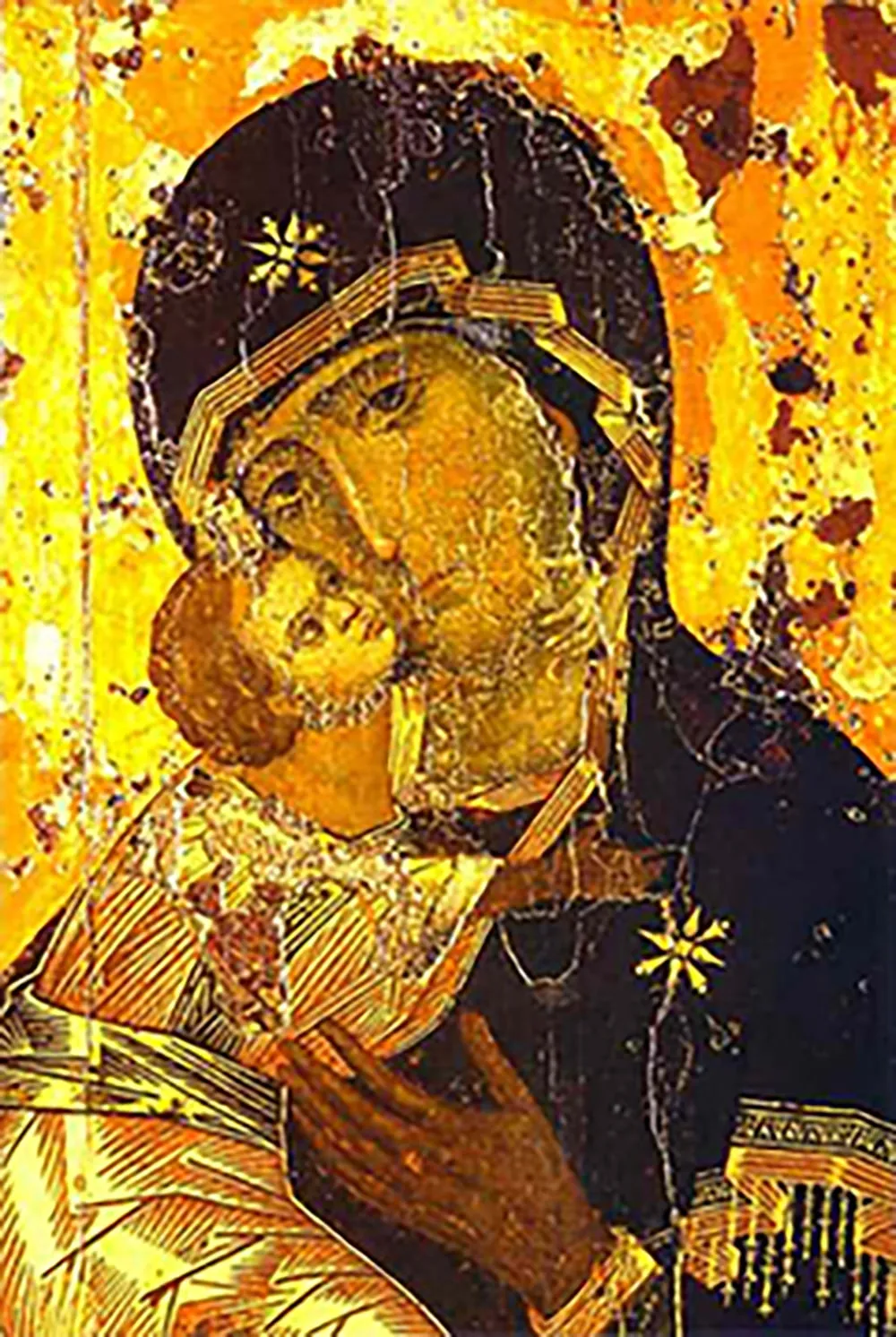
Icons are sometimes called windows onto eternity, offering a glimpse of the divine and the heavenly realm. They form a bridge between heaven and earth. As believers turn away from worldly concerns, the icon reveals the presence of God, angels and saints. Hence the expression: icons look at us.
Russian Icon Painting
Russian icons originated in the Byzantine tradition but soon developed their own identity, with several distinctive schools and styles.
Well-known schools include Novgorod, Vladimir-Suzdal and Moscow. Schools also developed in Yaroslavl, Palekh and the Stroganov tradition, although specialists less often regard these works as the high points of Russian icon painting.
Russian icon painting flourished between the thirteenth and sixteenth centuries. Major masters include Andrei Rublev, Daniil Chyorny, Theophanes the Greek and Dionisius.
Old Russian icons are renowned for their beauty and spiritual intensity. Their forms and colours express a religious ideal, inviting unity and revealing the joy and glory of the heavenly kingdom.
Where to See Icons
Many museums display icons. The largest collection I have personally seen together was at Museum Catharijneconvent in Utrecht. It is well worth visiting to experience their spiritual presence and beauty.
How Icons Are Made
Traditional icon making follows strict rules recorded in manuals such as the Podlinnik. Within Eastern Orthodoxy, painting an icon is a religious act. Painters consult a spiritual adviser and follow their guidance, often fasting, meditating and studying religious texts relating to the subject.
Icon painters use natural materials such as wood, linen, chalk, resin, glue and tempera, made from egg yolk, water and pigment. Gold leaf is frequently used for the background or halo around a saint’s head.
The process begins with a wooden panel. In Russian icons, the centre is often slightly recessed, leaving a raised border, described here as klejmo (Greek: skafto). Linen covers the panel, followed by layers of levkas, a chalk-and-glue ground. The design is then drawn in charcoal or pigment.
Gold leaf is applied before painting. The image is then built in tempera, working from dark to light. Russian painters commonly finish with olifa, a linseed-oil varnish; Greek painters often use a resin-based varnish.
Sometimes the image is carved in relief into the panel, with or without levkas, before being painted in tempera.
Decorative Covers for Icons
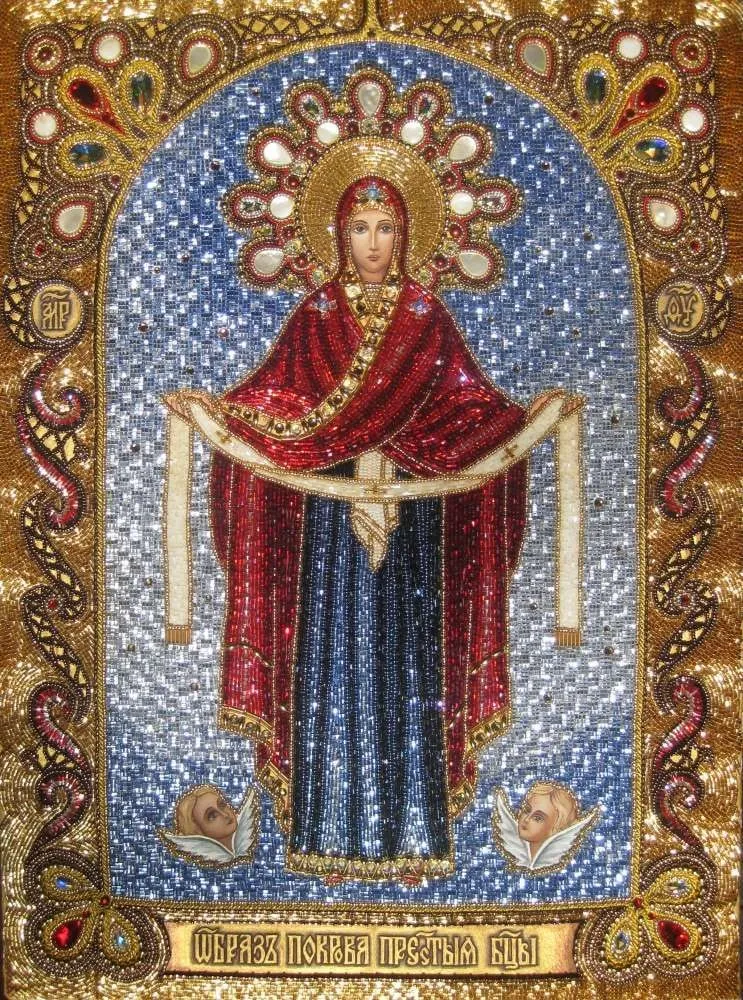
Icons considered especially sacred, old or valuable were often fitted with ornamental covers made from precious metals and richly decorated with pearls and gemstones. Some were dressed in embroidered textiles with beads and stones. Covers might frame only the edge or conceal almost everything except the saint’s face and hands.
Russian craftsmen often applied thin silver or gilded silver with plant motifs around the border, known as basma. A cover extending over more of the image is called an oklad or riza, meaning a robe.
The Meaning of Gold
Gold, aurum in Latin, is a precious metal that does not oxidise. Many cultures associate it with the sun, eternity and indestructibility. For centuries, it has served as currency and as a symbol of wealth and spiritual power.
Gold plays an important role in spiritual traditions such as Buddhism. Laughing Buddha statues are often gilded or made from gold, symbolising health, happiness and abundance.
In spiritual interpretations, gold is regarded as carrying energy, solar power and inner purity. It evokes clarity, wisdom, pleasure and growth, and is associated with decision-making, awareness and abundance.
People connect gold with prosperity, advancement, health, success, courage, love, wisdom, passion, appreciation and healing. It is often called the metal of the heart.
A Modern Interpretation with Gold Leaf
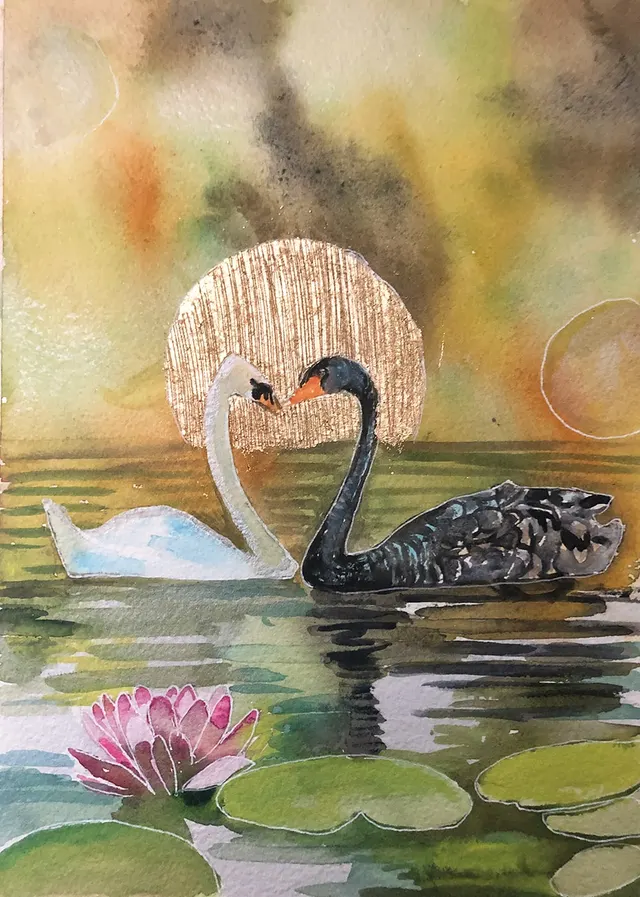
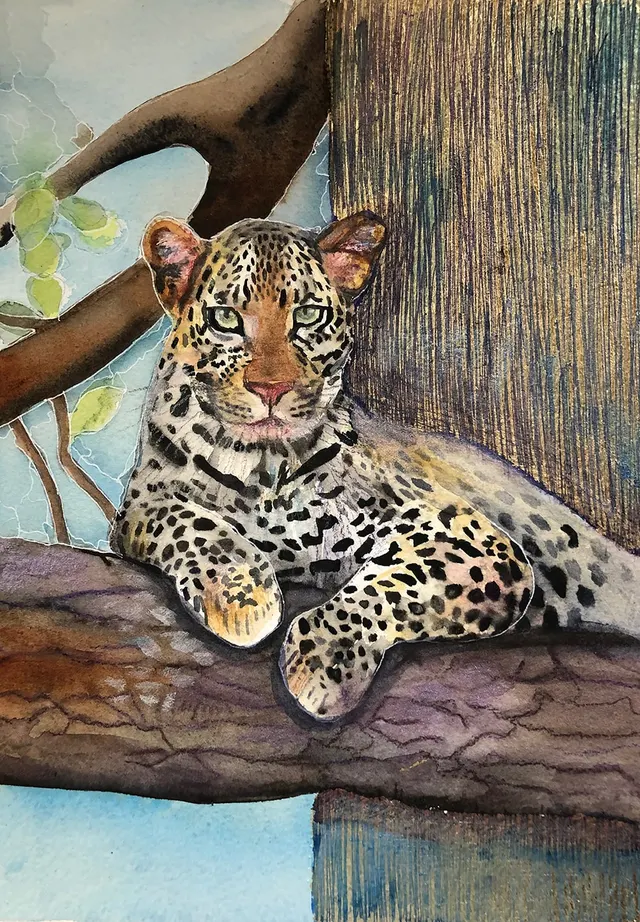
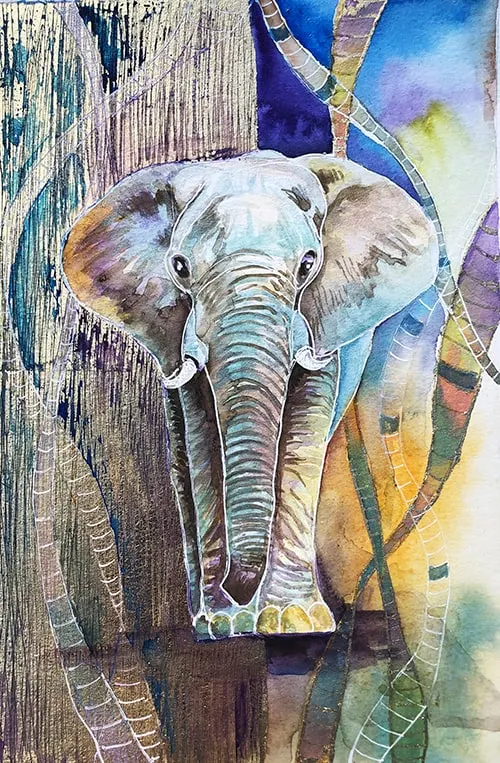
After years of studying different religions and developing a greater awareness of the spiritual world within and around me, I began working with gold leaf in 2022. I believe everything is sacred, including animals. Many ancient traditions, including African and Indian tribal cultures, give animals deep symbolic meaning.
I use gold leaf in small watercolours, sometimes adding details with a gel pen. You can see examples below. Explore the full selection in my watercolour gallery and my gallery of mixed media paintings.
See for Yourself
Would you like to experience the glow of gold leaf in person? Explore my collection in the gallery, where original paintings can be viewed and purchased. Each work is made with care and love, offering a window onto something greater.